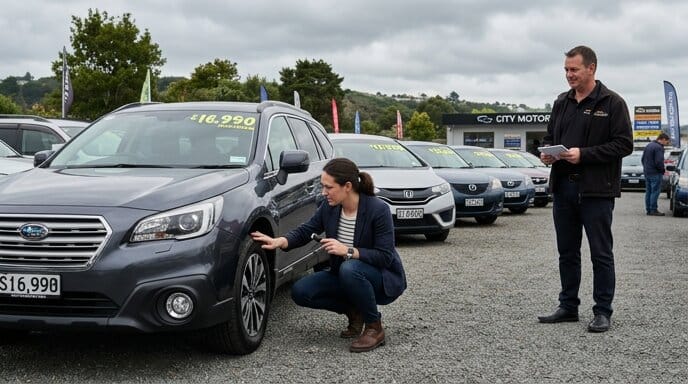
6 Ways To Negotiate A Better Deal
Table of Contents
Negotiating can be an intimidating task, especially when it comes to buying something expensive like a car, business equipment or any other large ticket item. However, with the right techniques, and even if you’re using Quickloans for financing your vehicle/car loan, or your business loan, you can effectively negotiate a better deal and save yourself considerable money. Chris Voss, a former FBI hostage negotiator, has developed effective negotiating techniques that can be applied to everyday life. In this blog, we will explore 6 ways to negotiate a better deal when buying something expensive using Chris Voss’s techniques.
#1 Do your research
Before you start negotiating, you should do some research on the item you are interested in purchasing. This includes researching the price range, the market demand, and the competition. By doing this research, you will have a better idea of what to expect when it comes to negotiating the price.
If you are buying a used car, check recent sold prices on Trade Me and AutoTrader for the same make, model, and year. If you are purchasing business equipment, get quotes from at least three suppliers. Knowing the market price gives you a factual anchor for the negotiation – not just a feeling that the price seems high.
#2 Use labeling
Labeling is a technique where you acknowledge the other person’s emotions and feelings. For example, if you are negotiating with a salesperson and they mention that the item is very popular and there are only a few left, you can label their statement by saying, “It sounds like you are concerned about running out of stock.” This technique allows you to build rapport with the other person and can lead to a more productive negotiation.
In a car buying scenario, if a dealer mentions that the vehicle has had a lot of interest, you might respond: “It sounds like you’re confident it will sell quickly.” This acknowledges their position without conceding yours, and often prompts them to offer something to secure the sale with you now rather than risk losing it.
#3 Use calibrated questions
Calibrated questions are open-ended questions that encourage the other person to provide more information. For example, instead of asking “Can you lower the price?” try “What is your best price if I am ready to buy today?” or “What would the price look like without the extended warranty?” These questions put the seller in problem-solving mode rather than defensive mode, and they often reveal flexibility you would not have known about. This type of question allows the other person to feel like they are part of the negotiation and can lead to a more positive outcome.
#4 Use mirroring
Mirroring is a technique where you repeat the last few words or phrases the other person says. For example, if the salesperson says, “This is the best deal you will find,” you can mirror by saying, “The best deal I will find?” This technique can help you gather more information and can also help build rapport with the other person.
This works particularly well when a seller quotes a price and adds a justification. If they say “The price reflects the low mileage,” responding with “The low mileage?” invites them to elaborate and often to qualify or soften their position without you having to push back directly.
#5 Use the “Ackerman model”
The Ackerman model is a negotiating technique that involves making incremental concessions. You start by making a low offer, and then each subsequent offer is slightly higher than the previous one. The idea behind this technique is that by making incremental concessions, the other person will feel like they are getting a good deal and will be more likely to accept your final offer.
In practice, for a car listed at $18,000, you might open at $14,500, then move to $15,800, then $16,200, then $16,400. Each increment is smaller, signalling that you are approaching your limit. The final number should be a non-round figure $16,350 feels more considered than $16,500 and suggests you have done the maths.
#6 Know when to walk away
Sometime, no matter how much you negotiate, the other person is not willing to budge on the price. In these situations, it is important to know when to walk away. Walking away can be a powerful negotiating tool, as it shows the other person that you are serious about getting a good deal. If you do decide to walk away, be sure to do so politely and leave the door open for future negotiations.
If you have pre-approved finance from Quick Loans, walking away costs you nothing you have the purchasing power to buy elsewhere, and the seller knows it. Pre-approval is one of the strongest negotiating positions you can have.
Why Pre-Approved Finance Changes the Negotiation
When you arrive at a dealership or supplier with finance already arranged, two things change. First, you remove the seller’s ability to profit from arranging finance on your behalf. Dealer finance and in-house payment plans often carry higher interest rates than what you would get from an independent lender, and the margin on that finance is profit for them. When you arrive pre-approved, that lever disappears.
Second, you can negotiate on the total price rather than on weekly repayments. Sellers often steer the conversation toward what you can afford per week because it obscures the total cost. With pre-approval, you already know your budget and your repayment terms, so you can focus entirely on getting the purchase price down. [Internal link: ]
Conclusion
In conclusion, negotiating can be a daunting task, but with the right techniques, you can successfully negotiate a better deal when buying something expensive. By doing your research, using labeling, calibrated questions, mirroring, the Ackerman model, and knowing when to walk away, you can increase your chances of getting a good deal. Stay calm, be polite, and be willing to walk away. And if you are buying something big a car, a ute, business equipment get your finance sorted first. Pre-approved finance from Quick Loans gives you certainty on your budget and leverage in the conversation.
Frequently Asked Questions
Q: Does pre-approval guarantee I will get the loan?
Pre-approval means the lender has assessed your application and is willing to lend up to a certain amount, subject to final checks such as confirming the condition and value of the vehicle or asset. It is not a binding guarantee, but it gives you strong confidence to negotiate.
Q: Is dealer finance ever a better option?
Occasionally, manufacturers offer genuinely subsidised finance rates on new vehicles or equipment. These can be competitive, but always compare the total cost of the dealer finance offer – including all fees and the purchase price – against what you would pay with independent finance and a negotiated cash price.
Q: Can I get pre-approved for a business purchase?
Yes. Quick Loans offers pre-approval for vehicle finance, equipment finance, and business loans. Having pre-approval in place before you approach suppliers puts you in a stronger position.
Q: Do these techniques work for online purchases?
Some translate well. Research, calibrated questions via email, and willingness to walk away are all effective online. Mirroring and labeling work best in person or on the phone where tone carries the conversation.

by Ash Horton
04/04/2023
Ash is a professional content writer with extensive experience in business development in the financial services. Ash has founded businesses from the age of 19, including franchising ventures, and working alongside some of the largest retailers in the world.